
 EN
EN
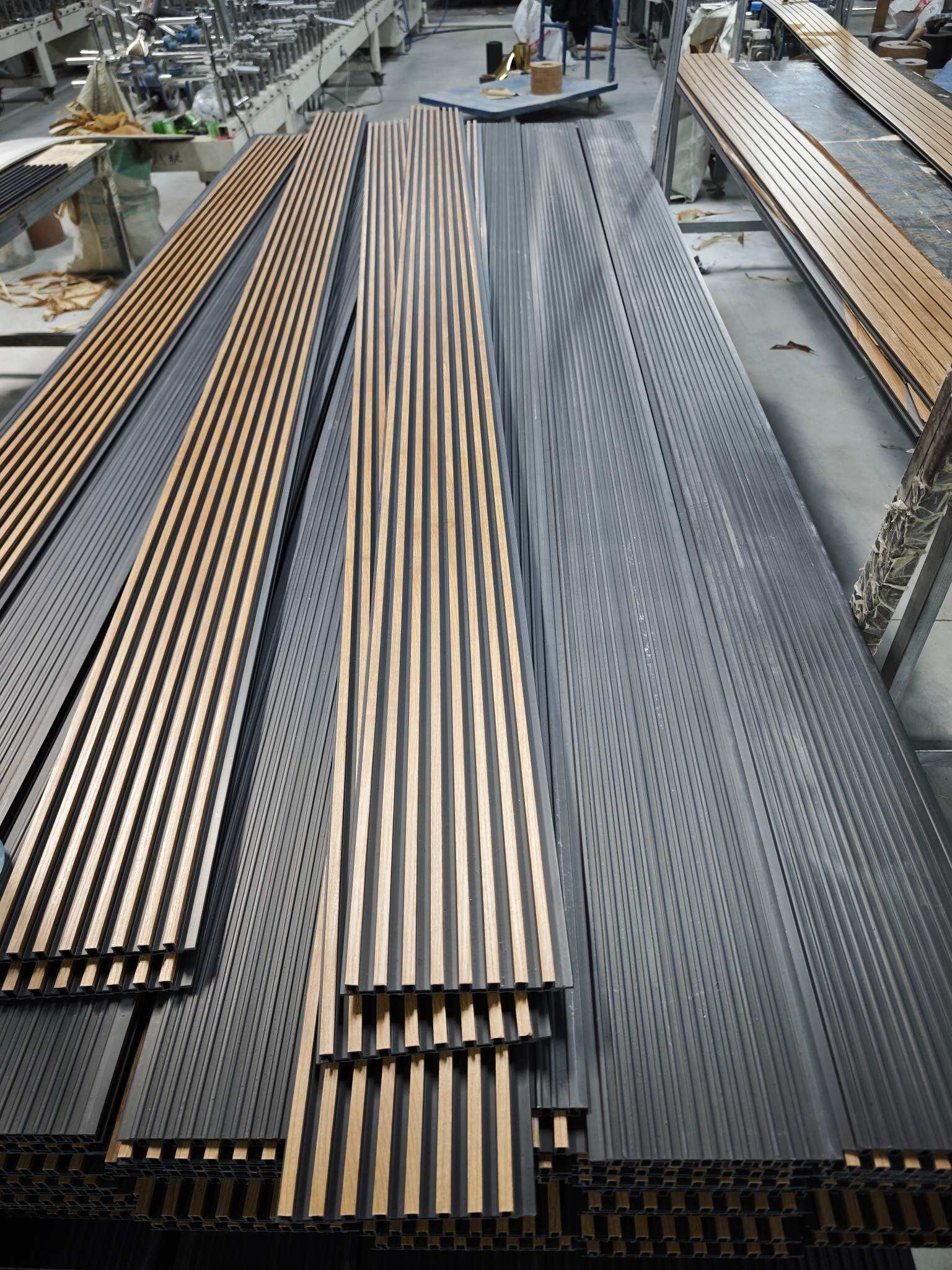
Why WPC Wall Panels Are a Sustainable Choice for Modern Interiors
Recycled Content, Low-VOC Formulation, and Compliance with Environmental Standards
Wood-plastic composite (WPC) wall panels integrate sustainability through material innovation. Typically comprising 60–80% recycled wood fibers and plastics from post-industrial and post-consumer sources, they divert waste from landfills while reducing reliance on virgin timber and petroleum-based resins. Unlike conventional materials, WPC formulations are engineered to minimize volatile organic compounds (VOCs)—emissions are typically 90% lower than PVC alternatives, significantly improving indoor air quality (Green Building Council, 2023). Third-party certifications—including GREENGUARD Gold and LEED v4.1—validate their environmental integrity, confirming alignment with globally recognized sustainability benchmarks.
Lifecycle Carbon Reduction vs. Solid Wood and PVC Alternatives
WPC panels deliver measurable lifecycle advantages. Manufacturing generates 30% lower carbon emissions than solid wood processing—largely due to energy-efficient extrusion and avoided deforestation impacts. Unlike natural wood, WPC requires no periodic resealing with solvent-based coatings, eliminating recurring VOC emissions and maintenance labor. Compared to PVC, WPC’s bio-based content and mechanical recyclability result in a 40% smaller end-of-life footprint, per the Circular Materials Index (2023). With a service life exceeding 25 years and resistance to rot, warping, and insect damage, WPC further reduces replacement frequency—making it a high-performance, low-carbon choice for long-term interior applications.
Designing with WPC Wall Panels: Aesthetic Versatility and Installation Flexibility
WPC (Wood Plastic Composite) wall panels combine visual sophistication with practical adaptability—ideal for residential, hospitality, and commercial interiors seeking both style and speed.
Realistic Wood Grain, Textured Finishes, and Color Consistency for Contemporary Spaces
Advanced embossing and digital printing technologies enable WPC panels to replicate natural wood grain with exceptional fidelity—offering tactile textures like wire-brushed oak, reclaimed barnwood, or fine-grain walnut. Unlike real wood, color and grain remain consistent across batches and over time, eliminating mismatched panels and minimizing material waste during installation. This reliability supports clean, minimalist aesthetics and large-scale monolithic wall treatments without visual disruption.
Modular Layout Options: Vertical, Horizontal, and Accent Wall Applications
Modular sizing and standardized profiles allow seamless integration in vertical, horizontal, or diagonal configurations—each serving distinct spatial goals. Vertical layouts enhance perceived ceiling height; horizontal runs widen narrow corridors or living areas; and bold accent walls create focal points in lobbies or open-plan offices. Because panels interlock via precision tongue-and-groove systems and require no wet trades, installation is up to 40% faster than traditional drywall or tile—reducing labor costs, site disruption, and construction timelines.
Performance Advantages of WPC Wall Panels in Real-World Environments
Verified Waterproofing, Fire-Retardant Properties, and Acoustic Dampening (ASTM/EN Tested)
WPC wall panels meet stringent performance requirements validated by independent ASTM and EN testing. Fully waterproof—even under continuous immersion—they maintain dimensional stability at humidity levels above 65%, making them ideal for bathrooms, wellness centers, and coastal environments. Fire-retardant variants achieve Class A flame-spread ratings (ASTM E84), limiting flame spread to under 25 and producing minimal smoke. Acoustically, their dense composite structure delivers STC ratings of 45–50, reducing airborne noise transmission by 15–20 decibels—outperforming standard PVC and many MDF-based systems. Additional validation includes zero warping after 1,000 hours of humidity cycling and impact resistance up to 35 MPa, ensuring resilience in high-traffic commercial settings.
Selecting the Right WPC Wall Panel: Key Specifications and Certification Guidance
Prioritize verified performance—not just marketing claims—when specifying WPC wall panels. Begin with composition: panels containing 60–70% wood fiber (balanced with recycled HDPE or PP) offer optimal strength-to-weight ratio and thermal stability. Surface durability hinges on UV-stabilized, abrasion-resistant coatings—look for QUV-tested finishes rated for ≥5,000 hours of simulated sun exposure.
Critical certifications include:
- Low-VOC Compliance: CARB Phase 2 or EPA TSCA Title VI certification, verifying formaldehyde emissions below 0.05 ppm.
- Fire Safety: B1 classification (per EN 13501-1) or Class A rating (ASTM E84), mandatory for public and multi-occupancy buildings.
- Moisture Resistance: IPX7-rated validation via full submersion testing (30 minutes at 1m depth), not just surface spray tests.
Also verify dimensional tolerances (±0.5 mm), tongue-and-groove alignment consistency, and load-bearing capacity (>200 kg/m² per ISO 17025-accredited lab reports). Avoid products with >15% mineral filler—excess calcium carbonate or talc degrades impact resistance and accelerates surface chalking over time.
FAQ
What are WPC wall panels made of?
WPC wall panels are composed of 60–80% recycled wood fibers and plastics, along with other additives to enhance performance.
How sustainable are WPC wall panels?
WPC panels offer sustainability through recycled content, reduced VOC emissions, and a lower lifecycle carbon footprint compared to solid wood and PVC.
Are WPC wall panels waterproof?
Yes, WPC wall panels are verified to be waterproof and maintain stability even under continuous immersion or high humidity conditions.
Can WPC panels be used for both residential and commercial spaces?
Absolutely. WPC wall panels are versatile and suited for various applications including residential homes, hotels, offices, and more.
What certifications should I look for when selecting WPC panels?
Seek panels with certifications like GREENGUARD Gold, CARB Phase 2 compliance, ASTM Class A fire ratings, and IPX7 moisture resistance.
Table of Contents
- Why WPC Wall Panels Are a Sustainable Choice for Modern Interiors
- Designing with WPC Wall Panels: Aesthetic Versatility and Installation Flexibility
- Performance Advantages of WPC Wall Panels in Real-World Environments
- Selecting the Right WPC Wall Panel: Key Specifications and Certification Guidance
- FAQ
