
 EN
EN
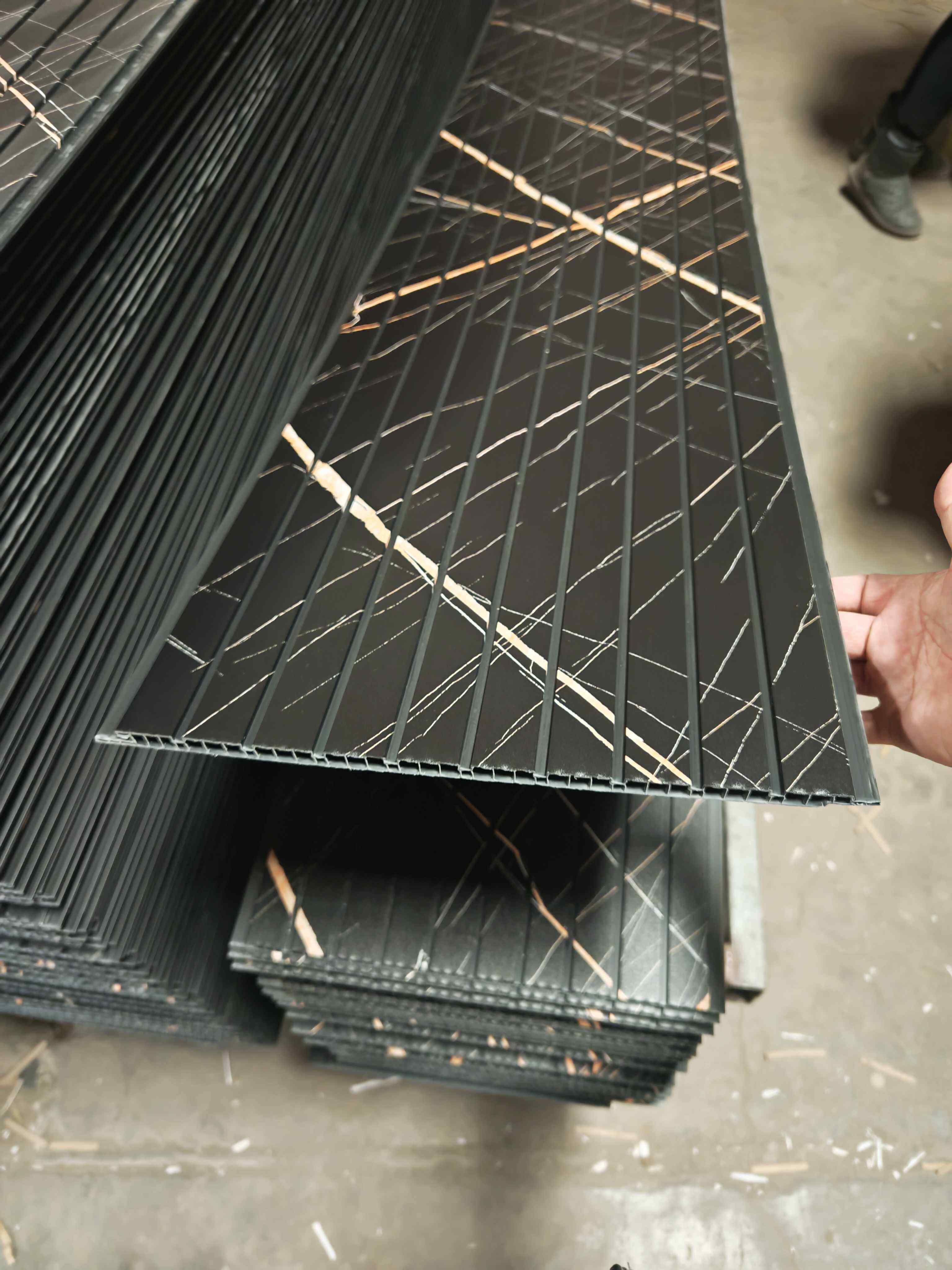
Superior Moisture Resistance for High-Humidity Interiors
How PVC’s Non-Porous Structure Prevents Water Absorption and Swelling
PVC wall panels excel in wet environments due to their fundamentally non-porous, closed-cell structure—an impermeable molecular barrier that blocks liquid penetration entirely. Unlike wood-based materials with microscopic cavities, PVC absorbs zero water, eliminating swelling, warping, or hydrostatic pressure damage. For context, MDF swells up to 15% within 72 hours of moisture exposure (Material Science Journal 2023), while PVC maintains dimensional stability even when fully submerged. Its monolithic surface also removes grout lines and seams—common entry points for water—delivering complete, maintenance-free protection without sealants.
Proven Performance in Bathrooms, Kitchens, and Basements vs. MDF, Plywood, and Treated Wood
In real-world high-humidity applications, PVC wall panels consistently outperform conventional alternatives:
| Material | Failure Rate in Wet Zones | Primary Weakness |
|---|---|---|
| Standard MDF | 89% within 2 years | Core disintegration when damp |
| Marine Plywood | 42% within 5 years | Edge delamination |
| Treated Wood | 31% within 7 years | Sealant degradation |
| PVC Wall Panels | <3% over 10-year span | None (inherently waterproof) |
These figures reflect observable failures: plywood develops hidden mold beneath veneers within months; treated wood requires annual resealing to resist rot; and MDF blisters under laminates when exposed to kitchen steam. In basements—where moisture-resistant MDF still absorbs 18% ambient humidity (Building Materials Report 2023)—PVC remains unaffected. Its homogeneous, waterproof construction is the only solution validated for continuous 100% humidity environments without performance degradation.
Low-Maintenance Durability: Cleaning, Mold Resistance, and Longevity
Effortless Cleaning Protocols and Up to 70% Less Maintenance Labor vs. Grouted Tile or Painted Drywall
PVC wall panels require only periodic wiping with mild detergent—no scrubbing, resealing, waxing, or specialized cleaners. Their non-porous surface repels spills, steam, and humidity, preventing staining and surface degradation. Facility management studies confirm cleaning time reductions of up to 70% compared to grouted tile (where porous grout traps dirt) or painted drywall (prone to scuffing and water damage). This efficiency is especially critical in commercial kitchens and healthcare settings, where rapid sanitation turnover is non-negotiable—and decades of visual integrity are maintained with soap and water alone.
ASTM D3273 & ISO 846 Validation: Inherent Resistance to Mold, Mildew, and Staining
PVC wall panels exceed both ASTM D3273 and ISO 846 standards for mold and mildew resistance—without relying on topical antimicrobial coatings. Independent testing confirms zero moisture absorption, removing the primary condition required for microbial growth in organic substrates like wood or drywall. This inherent property makes PVC uniquely suited for high-humidity spaces—including basements, bathrooms, and food processing facilities—where relative humidity regularly exceeds 70%. Unlike treated wood (whose antifungal additives leach or degrade over time) or porous tiles, PVC resists not only mold but also UV fading and chemical corrosion thanks to its solid, homogenous composition.
Design Flexibility and Realistic Aesthetic Options
Advanced Embossing, UV Lamination, and Texture Replication: Wood Grain, Stone, and Metallic Finishes
Modern PVC wall panels achieve exceptional realism through precision manufacturing: embossing creates authentic tactile depth—reproducing the grain of reclaimed oak or the crystalline texture of marble—while UV lamination bonds high-resolution photographic layers under durable, colorfast coatings. Material simulation studies show 98% visual accuracy in replicating natural details like wood knots and mineral veining. Proprietary molding techniques further enhance authenticity by mimicking porous stone surfaces or finely brushed-metal finishes. The result is seamless aesthetic integration across spaces—such as pairing oak-look panels in a study with stainless-steel-effect kitchen backsplashes—without compromising structural consistency or installation simplicity.
Rapid, DIY-Friendly Installation with Structural Advantages
Interlocking Systems, Lightweight Profile, and No Special Tools—Cutting Labor Time by 50–60% vs. Traditional Wall Coverings
PVC wall panels use intuitive tongue-and-groove interlocking systems that eliminate complex alignment, mortar mixing, or curing delays. At roughly 70% lighter than tile or stone, they enable single-person handling and reduce structural load demands. Installation requires only basic tools—a utility knife, level, and drill—making them ideal for DIY projects and professional retrofits alike. Field studies show labor time reductions of 50–60% versus ceramic tile or plaster, with contractors reporting 2–3× faster room completions using clip-and-lock mechanisms. Panels install directly over existing drywall or plywood, avoiding demolition, debris, and disposal costs—while their seamless integration inherently reinforces wall planes against impact and substrate movement better than segmented alternatives.
FAQ
What makes PVC wall panels ideal for high-humidity areas?
PVC wall panels have a non-porous, closed-cell structure that prevents water absorption, swelling, and warping, making them perfect for bathrooms, kitchens, and basements.
How do PVC wall panels compare to other materials like MDF or plywood in wet areas?
Unlike MDF and plywood, which are prone to swelling, delamination, or mold growth, PVC wall panels are inherently waterproof and maintain dimensional stability even in continuous 100% humidity environments.
Are PVC wall panels resistant to mold and mildew?
Yes, PVC wall panels exceed ASTM D3273 and ISO 846 standards for mold and mildew resistance thanks to their moisture-proof construction.
Can PVC panels mimic natural textures like wood or stone?
Absolutely, modern manufacturing techniques allow PVC panels to replicate natural textures with precision embossing and UV lamination for a visually authentic look.
Are PVC wall panels easy to install for DIY projects?
Yes, PVC panels use interlocking systems that require no special tools, allowing for rapid and lightweight installation for both professionals and DIY enthusiasts.
Table of Contents
- Superior Moisture Resistance for High-Humidity Interiors
- Low-Maintenance Durability: Cleaning, Mold Resistance, and Longevity
- Design Flexibility and Realistic Aesthetic Options
- Rapid, DIY-Friendly Installation with Structural Advantages
-
FAQ
- What makes PVC wall panels ideal for high-humidity areas?
- How do PVC wall panels compare to other materials like MDF or plywood in wet areas?
- Are PVC wall panels resistant to mold and mildew?
- Can PVC panels mimic natural textures like wood or stone?
- Are PVC wall panels easy to install for DIY projects?
