 EN
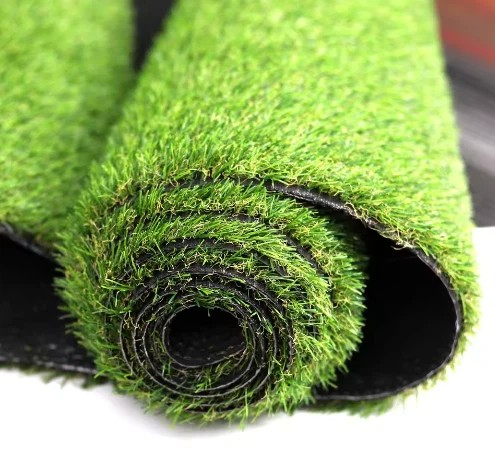
Material Quality: Yarn, Backing, and Infill for Durable Artificial Turf
Material quality determines how well artificial turf resists wear, weather, and daily use. Focus on yarn, backing, and infill to avoid early replacement.
Yarn Type and Polymer Composition: Polyethylene vs. Polypropylene vs. Monofilament vs. Slit-Film
Yarn type shapes softness, resilience, and appearance. Polyethylene fibers balance softness and toughness—making them the standard for residential lawns and pet areas—and resist crushing better than cheaper alternatives. Polypropylene is less expensive but less durable; it tends to flatten or fade faster under direct sun or heavy traffic. Monofilament yarns use individual, rounded fibers that closely mimic natural grass blades and typically deliver superior resilience and realism. Slit-film yarns are tape-like, less lifelike, and best suited for low-traffic or decorative applications where cost is a primary concern. Yarn denier (fiber thickness) influences wear resistance and feel: higher denier often improves durability but may reduce softness. Always request physical samples and assess both hand feel and recovery after pressure. Match polymer selection to your climate, foot traffic, and lifespan goals—never choose solely by price, as yarn quality directly governs long-term safety, aesthetics, and performance.
Backing System Integrity: Perforation Density, Latex vs. Polyurethane Bonding, and Dimensional Stability
Backing holds yarn in place and ensures structural stability. A dual-layer system—primary backing to anchor fibers and secondary backing to lock them in—provides optimal support. Perforation density controls drainage efficiency: sufficient holes per square meter prevent water pooling and reduce buckling risk. Low perforation density traps moisture, accelerating backing degradation over time. Latex bonding offers cost-effective performance for moderate residential use, while polyurethane delivers stronger fiber adhesion, superior dimensional stability, and greater resistance to edge curling and seam failure—especially critical for large or high-traffic installations. A robust backing resists yarn loss, thinning, cracking, and delamination across temperature fluctuations. When evaluating products, inspect drainage hole uniformity and ask for coating weight specifications—key indicators of long-term integrity.
Infill Composition Options: Silica Sand, Rubber Crumb, and Eco-Friendly Alternatives
Infill supports grass blades, adds ballast, and influences shock absorption, drainage, and surface temperature. Silica sand provides firm stability and excellent drainage when properly graded; it’s ideal for decorative or low-to-moderate-use areas. Rubber crumb enhances cushioning and is widely used on sports fields and playgrounds—but it retains heat and faces increasing regulatory scrutiny in some regions. Eco-friendly alternatives—including cork, coconut fiber, and coated organic blends—offer improved thermal regulation, softer underfoot feel, and enhanced drainage. While these options may require more frequent top-ups in high-traffic zones, they’re especially valuable in heat-sensitive or environmentally conscious settings. Match infill type to function: sand for shape retention, rubber for impact protection, or organic blends for comfort and sustainability. Confirm recommended infill depth and maintenance frequency before purchase.
Performance & Safety Standards for Reliable Artificial Turf
Checking performance and safety standards helps buyers avoid artificial turf that fades, overheats, or releases unwanted chemicals. Two areas deserve attention: weathering resistance and regulatory compliance.
UV and Fade Resistance with Thermal Stability: ASTM G154/G155 Compliance and Real-World Longevity
UV-stabilized yarns protect against fading, splitting, and surface hardening. ASTM G154 (fluorescent UV lamp) and ASTM G155 (xenon arc) are industry-standard accelerated weathering tests. G155 better replicates full-spectrum sunlight and is preferred for hot, high-UV climates. Both evaluate color change (Delta E), gloss loss, and tensile strength retention under controlled heat and moisture cycles. For reliable longevity, request third-party reports showing ≥90% tensile strength retention and Delta E ≤3.0 after 3,000–5,000 hours. Thermal stability matters too: darker turfs can reach surface temperatures exceeding 150°F. Some manufacturers mitigate this with heat-reflective pigments or optimized yarn geometry. An 8–10-year UV warranty—explicitly covering degradation, not just manufacturing defects—is a strong indicator of polymer quality and stabilizer package effectiveness.
Regulatory Certifications: CPSIA, Prop 65, REACH, and Third-Party Testing for VOCs, Heavy Metals, and PFAS
Regulatory certifications verify safety for people and the environment. CPSIA sets strict limits on lead and phthalates in products intended for children. California Proposition 65 mandates warnings for listed carcinogens and reproductive toxins—so certified turf should carry no such warning unless required. REACH regulates chemical substances across the EU, including heavy metals, PFAS, and persistent organic pollutants. Reputable suppliers provide lot-specific, third-party lab reports for VOCs, heavy metals, and PFAS—especially important as PFAS are sometimes used in backings or extrusion aids. Many leading manufacturers now offer verified PFAS-free turf. For schools, playgrounds, or indoor applications, look for low-emission certifications aligned with indoor air quality standards like GREENGUARD Gold. In 2024, transparent, up-to-date testing documentation is no longer optional—it’s the baseline expectation for responsible sourcing.
| Regulation | Region | Key Focus |
|---|---|---|
| CPSIA | United States | Lead and phthalate limits for children’s products |
| California Proposition 65 | California, United States | Warning labels for carcinogens and reproductive toxins |
| REACH | European Union | Restrictions on heavy metals, PFAS, and other harmful substances |
Installation Readiness and Long-Term Maintenance of Artificial Turf
Proper installation and routine upkeep determine how well artificial turf handles water, traffic, and edge stress over time. Drainage efficiency, subbase preparation, and edge securing methods form the foundation of long-term performance.
Drainage Efficiency, Subbase Preparation, and Edge Securing Methods
Drainage begins with proper site grading—ideally 1–2% slope—to direct runoff away from structures. A compacted gravel or crushed stone subbase (typically 4–6 inches deep) ensures consistent load distribution and prevents water accumulation beneath the turf. Perforated backing must align with this engineered drainage path to avoid freeze-thaw damage and fiber compression. Edges should be secured using professional-grade galvanized or stainless steel stakes or nails every 4–6 inches along the perimeter, with seams precisely aligned to the stitch line to minimize gaps and movement. After installation, routine brushing (every 3–6 months) and debris removal maintain infill distribution and preserve drainage channel integrity. Well-executed installation combined with proactive maintenance routinely extends service life to 10–15 years. Conversely, poor compaction, inadequate drainage design, or loose edges frequently trigger premature wrinkling, ripples, and standing water—particularly in high-rainfall regions where subbase stability and hydraulic performance dictate long-term reliability.
FAQ Section
What is the best yarn type for residential artificial turf?
Polyethylene fibers are generally considered the best option for residential lawns and pet areas due to their balance of softness, toughness, and resistance to crushing.
How can I determine the backing quality of artificial turf?
Look for dual-layer systems with high perforation density for drainage and robust bonding, preferably with polyurethane backing for greater stability and durability.
What are the eco-friendly infill options available?
Eco-friendly infill options include cork, coconut fiber, and coated organic blends, which provide improved thermal regulation and sustainability.
How do ASTM weathering standards ensure turf durability?
ASTM G154 and G155 tests assess UV resistance, color stability, and tensile strength over various heat and moisture cycles, ensuring turf longevity even under harsh conditions.
What certifications should I look for in artificial turf?
Look for certifications such as CPSIA, California Proposition 65, REACH, and GREENGUARD Gold for assurances regarding safety from chemicals, VOCs, and heavy metals.