
 EN
Decoding the Global Preference for MDF in Modern Furniture Production
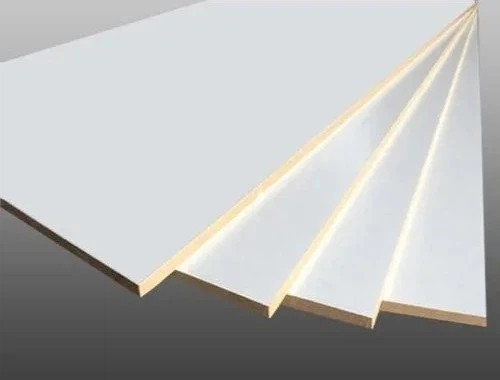
International furniture manufacturing standards have undergone a profound transformation over recent decades, driven by an escalating market demand for materials that seamlessly balance aesthetic versatility with uncompromising structural uniformity. Across residential and commercial construction projects globally, interior architects, case goods manufacturers, and procurement specialists increasingly specify engineered medium density fiberboard panels for cabinetry, architectural millwork, and modular furniture systems. This innovative MDF substrate has quickly established itself as a dominant force in contemporary furniture production because every premium MDF panel delivers unmatched surface smoothness and exceptional dimensional stability. Understanding the engineering breakthroughs behind high-performance MDF elements requires looking far beyond surface appearances to examine the underlying raw material compositions, advanced manufacturing precision, and machining mechanics that separate ordinary building boards from truly superior architectural surfaces. Procurement teams worldwide rely on certified MDF solutions for large-scale developments. Furthermore, analyzing market positioning for each preferred MDF option ensures seamless project execution across demanding commercial real estate portfolios, establishing robust foundations for modern furniture manufacturing.
The Advanced Material Science Behind Homogeneous Core Composition
The fundamental reason why rigid MDF composite substrate dominates modern furniture specifications lies within its unique homogeneous engineered structure. Unlike traditional solid timber or rough-cut lumber, medium density fiberboard boards combine refined wood fibers, synthetic resin binders, and stabilizing additives under intense heat and high-pressure consolidation. This proprietary manufacturing formulation creates an exceptionally dense, uniform MDF core that eliminates natural knots, grain irregularities, and directional weakness. According to technical data published by materials science laboratories, this solid MDF matrix prevents warping, splitting, or dimensional twisting when exposed to fluctuating indoor temperatures and humidity shifts. Engineers and manufacturers utilize specialized refining technology to ensure that every square meter of MDF material maintains uniform density and unyielding structural integrity across massive commercial installations, making modern MDF applications exceptionally reliable. Every manufactured MDF batch reflects the underlying engineering precision of the facility and guarantees consistent machining quality.
Superior Machinability and Surface Finishing Versatility
Furniture fabrication facilities subject to rigorous design specifications require materials that accommodate intricate routing, profiling, and flawless edge banding without splintering. Traditional natural wood grain patterns often present severe machining challenges, including tear-out along complex contours and uneven staining results. In contrast, advanced MDF materials offer complete uniformity during cutting, routing, and painting operations. Because the engineered MDF core contains finely pulverized wood fibers distributed evenly throughout, cutting tools encounter zero directional resistance or grain variation. Building auditors and furniture manufacturers consistently observe that high-quality MDF boards eliminate common fabrication failures, providing an ultra-smooth substrate for high-gloss laminates, wood veneers, and specialized coatings, establishing premium MDF as an industry standard for seamless edge finishing and superior aesthetic appeal.
Meeting Global Regulatory Standards and Indoor Air Quality Demands
Modern commercial real estate developments and furniture export markets face intense scrutiny regarding international environmental accountability, indoor air quality, and sustainable building credentials. Forward-thinking procurement managers no longer accept vague eco-friendly assertions; they demand rigorous third-party verification, comprehensive laboratory test certificates, and transparent chain-of-custody documentation when sourcing certified MDF inventory. Leading manufacturers align their production ecosystems with recognized international standards, including ISO management systems, CARB Phase 2 compliance, EPA formaldehyde emission limits, and heavy-metal-free formulations. Furthermore, utilizing sustainably harvested wood fibers alongside low-emission binding resins supports green building rating systems such as LEED and BREEAM. Reviewing batch-specific test reports for internal bond strength, screw holding capacity, and low-VOC emissions ensures full compliance with international safety regulations and environmental protection laws for every exported MDF batch across target global markets.
Optimizing Long-Term Project Value Through Global Promises Supply Chain Excellence
Procuring decorative wood panels and furniture components internationally involves more than verifying factory specifications; it requires complete confidence in export logistics, protective packaging, and timely port delivery. Even the finest MDF composite boards fail to deliver value if transit moisture or handling damage compromises their finish before assembly. Effective global procurement demands seamless coordination between advanced factory production floors and experienced international freight forwarders. Global Promises bridges the gap between raw material manufacturing and exacting international architectural standards through rigorous quality control protocols and robust export packaging solutions—such as reinforced edge protection, pallet strapping, and moisture-barrier shrink-wrapping. By combining state-of-the-art pressing technology, comprehensive laboratory testing, and dependable shipping coordination, Global Promises ensures that every batch of high-performance MDF material arrives on-site in pristine condition, empowering international developers and furniture manufacturers to achieve structural excellence across every venture involving specialized MDF products.
Building Long-Term Market Resilience Through Sustainable Manufacturing
Ultimately, mastering the procurement of engineered wood finishes demands an unwavering commitment to continuous quality improvement, strict environmental transparency, and dependable manufacturing alliances. As international construction standards continue to evolve toward sustainable building practices and rigorous indoor emission controls, selecting industry-leading production partners ensures that commercial projects remain structurally sound, aesthetically striking, and fully compliant for generations to come.
Table of Contents
- Decoding the Global Preference for MDF in Modern Furniture Production
- The Advanced Material Science Behind Homogeneous Core Composition
- Superior Machinability and Surface Finishing Versatility
- Meeting Global Regulatory Standards and Indoor Air Quality Demands
- Optimizing Long-Term Project Value Through Global Promises Supply Chain Excellence
- Building Long-Term Market Resilience Through Sustainable Manufacturing