
 EN
EN
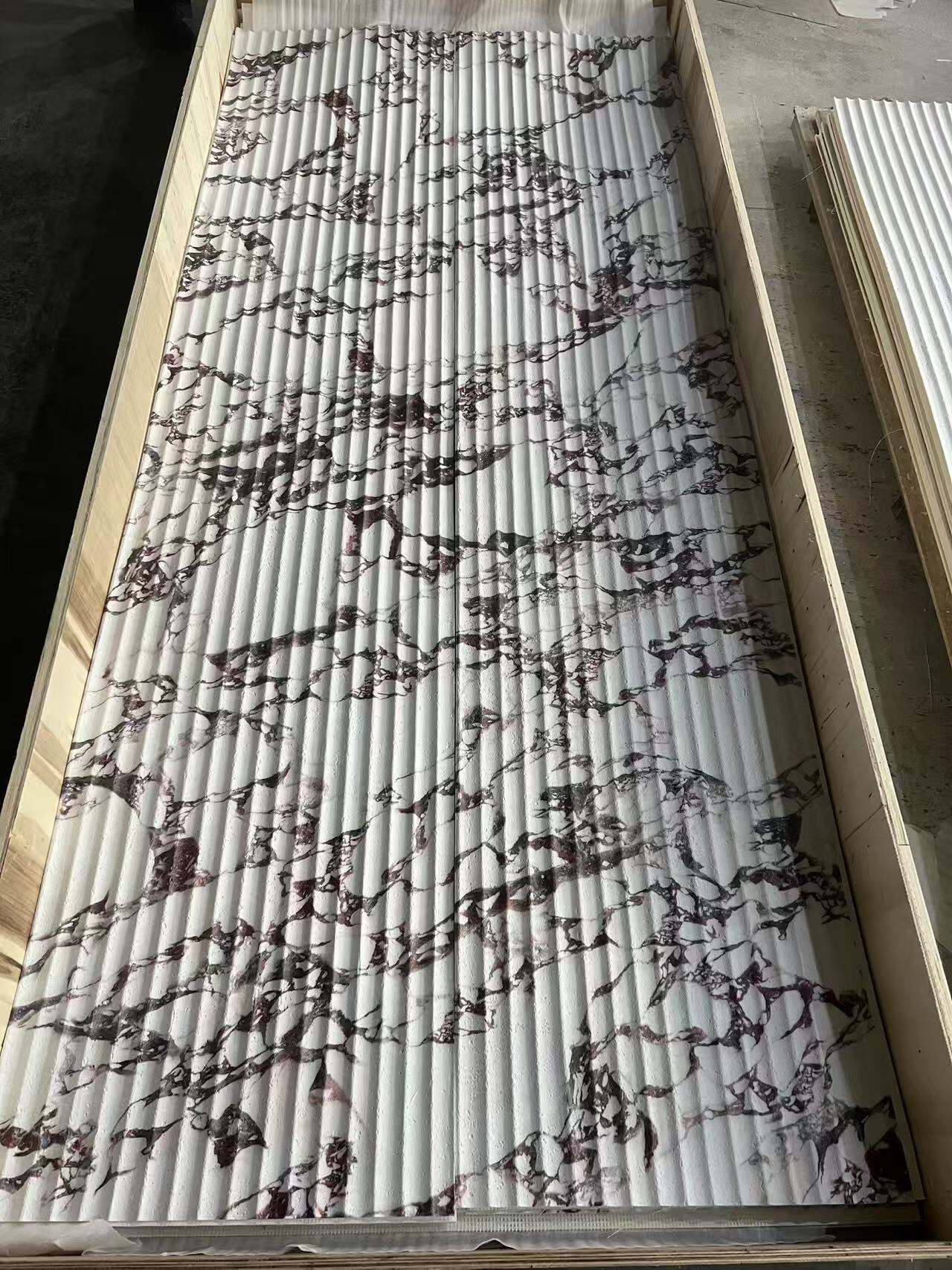
What Is Soft Porcelain? Material Science Behind Its Wall Cladding Advantage
Composition and Low-Temperature Sintering: How Soft Porcelain Achieves Flexibility Without Sacrificing Durability
Soft porcelain combines refined white clay with controlled additions of ground glass. Unlike traditional porcelain—fired at ~1,200°C—it undergoes low-temperature sintering (typically 950–1,050°C), which fuses particles without full vitrification. This preserves a micro-porous structure that imparts measurable flexibility while retaining <0.5% water absorption and flexural strength exceeding 50 MPa—on par with natural stone but with superior crack resistance. The retained porosity allows the material to absorb minor substrate movement, making it especially resilient in freeze-thaw cycles and seismic zones.
Performance Benchmark: Comparing Soft Porcelain vs. Traditional Porcelain, Natural Stone, and Ceramic Tiles for Exterior Walls
Soft porcelain delivers a rare convergence of lightness, durability, and thermal stability—key advantages for modern wall systems. It weighs 30% less than natural stone and 8% less than traditional porcelain, yet achieves higher flexural strength and far greater thermal shock resistance. Its ultra-low water absorption (<0.5%) slashes efflorescence risk compared to ceramics (3–10%) and natural stone (3–7%). UV-stable mineral pigments ensure color fidelity beyond 25 years—outperforming organically tinted alternatives.
| Material | Density (kg/m³) | Water Absorption (%) | Flexural Strength (MPa) | Thermal Shock Resistance |
|---|---|---|---|---|
| Soft Porcelain | 2,300 | <0.5% | 50+ | Excellent |
| Traditional Porcelain | 2,500 | <0.5% | 35 | Moderate |
| Natural Stone | 2,700 | 3–7% | 15–30 | Poor |
| Ceramic Tiles | 2,000 | 3–10% | 22 | Low |
Architects increasingly specify soft porcelain in high-risk environments—not only for its structural resilience but also for its proven performance in post-earthquake façade assessments conducted by the International Masonry Institute.
Decorative Power of Soft Porcelain: Realistic Textures, Warm Tones, and Biophilic Appeal
Digital Inkjet Precision: Replicating Stone, Concrete, and Organic Surfaces with Tactile Authenticity
High-resolution digital inkjet printing enables soft porcelain to replicate natural surfaces with visual and tactile fidelity previously unattainable in ceramic-based cladding. Mineral-based pigments are layered precisely to mirror stone grain, concrete striations, or wood fiber patterns—creating micro-textures that respond dynamically to ambient light and hand-feel. Crucially, this process achieves authentic relief aligned with the printed design, unlike stamped or embossed methods that decouple texture from image. According to the 2023 Architectural Materials Survey, 78% of specifiers selected soft porcelain over natural stone for exterior walls—citing realism, consistency across large façades, and long-term maintenance savings as decisive factors.
Color Trends in Commercial Architecture: Why Ecru, Chalk, and Clay Tones Dominate Soft Porcelain Spec Sheets (2022–2024)
Ecru, chalk, and clay tones represent 62% of soft porcelain selections in commercial projects (2024 AIA Materials Intelligence Report), reflecting a deliberate shift toward biophilic and human-centered design. These warm neutrals support two evidence-based outcomes:
- Biophilic integration: Clay-hued façades correlate with a 17% reduction in measured physiological stress markers in workplace environments (Journal of Environmental Psychology, 2023).
- Adaptive minimalism: Matte-finish ecru and chalk provide tonal neutrality that frames bold architectural form without visual competition.
Soft porcelain’s inherent matte surface diffuses light evenly—eliminating glare while enhancing perceived depth and texture—making it uniquely suited to deliver both aesthetic warmth and functional calm in wellness-oriented architecture.
Practical Installation & Structural Benefits for Building Wall Systems
Soft porcelain streamlines façade construction through lightweight modularity and precision engineering. Panels install up to 40% faster than natural stone cladding, thanks to factory-calibrated edges and simplified mechanical anchoring systems. At under 15 kg/m², its low mass reduces structural reinforcement requirements by up to 30% and enables direct retrofitting over existing substrates—including aged masonry and concrete—without load-bearing upgrades. Its near-zero water absorption (<0.5%) eliminates freeze-thaw degradation, while thermally stable formulations withstand sustained exposure from –30°C to 100°C—minimizing envelope stress across climate zones. Integrated thermal performance delivers 15–20% better insulation than standard ceramic tiles, contributing directly to reduced HVAC demand. Impact resistance exceeds 50 Joules—ensuring integrity in high-traffic or exposed façade zones—while maintaining slim 3–5 mm profiles that conceal conduits, wiring, and plumbing within wall cavities without compromising aesthetics or buildability.
FAQ
What is the main advantage of using soft porcelain over traditional porcelain?
Soft porcelain offers enhanced flexibility while maintaining durability due to its low-temperature sintering process, making it ideal for environments with freeze-thaw cycles and seismic activity.
How does soft porcelain compare to natural stone in terms of weight and strength?
Soft porcelain is 30% lighter than natural stone but offers higher flexural strength and better thermal shock resistance.
Why are ecru, chalk, and clay tones popular in soft porcelain?
These colors support biophilic and human-centered design, helping to reduce stress markers and provide a neutral backdrop for architectural innovations.
How does the installation of soft porcelain panels improve construction efficiency?
The lightweight and modular design of soft porcelain panels allows for quicker installation and requires less structural reinforcement, enabling direct retrofitting without significant upgrades.
Table of Contents
- What Is Soft Porcelain? Material Science Behind Its Wall Cladding Advantage
- Decorative Power of Soft Porcelain: Realistic Textures, Warm Tones, and Biophilic Appeal
- Practical Installation & Structural Benefits for Building Wall Systems
-
FAQ
- What is the main advantage of using soft porcelain over traditional porcelain?
- How does soft porcelain compare to natural stone in terms of weight and strength?
- Why are ecru, chalk, and clay tones popular in soft porcelain?
- How does the installation of soft porcelain panels improve construction efficiency?
