
 EN
EN
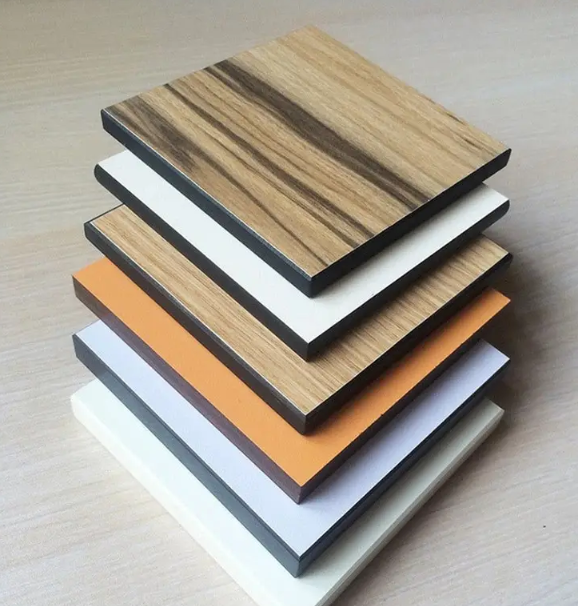
Understanding MDF Material Properties and Performance Trade-offs
Density, Composition, and Dimensional Stability Explained
Medium Density Fiberboard gets its strength from being made consistently throughout. The material is basically wood fibers glued together using heat and pressure with synthetic resins, typically at around 600 to 800 kg per cubic meter density. Because it's so uniform, MDF doesn't have those weak spots that natural wood does when it comes to splitting along the grain direction. One big advantage over regular wood is how MDF holds its shape even when humidity levels change. Traditional materials tend to warp or twist as temperatures and moisture fluctuate, but MDF stays stable most of the time. Plus, since there are no wood grains on the surface, applying finishes like veneers, laminates or paint works much smoother and faster in manufacturing settings.
MDF vs. Plywood and Particleboard: When MDF Is the Optimal Choice
- Precision Machining: MDF’s consistent density enables intricate carving and edge detailing without splintering—unachievable with coarse-grained particleboard.
- Surface Quality: Unlike plywood’s visible layered structure, MDF accepts flawless painted or laminated finishes ideal for visible components like cabinet doors and decorative panels.
- Cost Efficiency: For non-load-bearing applications (e.g., drawer fronts, decorative wall panels), MDF offers superior flatness and lower cost than plywood.
- Moisture Limitations: Standard MDF swells in wet environments. For humid interiors, MR-MDF—with water-repellent additives—is essential. Load-bearing uses (shelves, tabletops) require plywood or HDF unless reinforced with structural supports.
Matching MDF Grades and Thicknesses to Furniture Applications
Non-Load-Bearing Components: Cabinets, Drawer Fronts, and Decorative Panels
Regular MDF works really well for things that don't need to hold much weight like cabinets, drawer fronts, and those fancy decorative panels around the house. The material has a nice smooth finish, stays stable even when cut, and the particles are small enough to give it that professional look. What makes MDF special is how evenly mixed everything is inside (usually between 600 and 800 kg per cubic meter). This consistency means tools work better on it and paints stick without problems, which is why it's so popular for detailed edge work, wood veneers, and shiny painted surfaces. When building cabinets for kitchens or bathrooms where there might be lots of moisture around, people tend to go for moisture resistant MDF instead. If sealed correctly, this version won't swell up when exposed to humidity, keeping its shape over time. Most folks stick with 12mm thick sheets for drawer fronts since they're light enough but still sturdy, while cabinet frames typically use 18mm material. This gives good support without breaking the bank too much, especially when making something that needs to look nice but doesn't have to carry heavy loads.
Load-Bearing Limitations: Shelves, Table Tops, and Structural Reinforcement Strategies
MDF is inherently unsuited for unsupported load-bearing roles: standard grades may sag under sustained loads exceeding 15 kg per linear meter. High-density MDF (HD-MDF, 800–1100 kg/m³) improves rigidity for medium-duty shelves but still requires reinforcement. Proven strategies include:
- Adding solid wood or metal edge-banding to distribute weight
- Incorporating internal steel brackets or plywood substructures
- Limiting unsupported spans to ≤60 cm for 18 mm shelves These approaches reduce deflection by over 40% while preserving MDF’s cost and finishing advantages for tabletops and supported furniture frames.
Moisture Resistance, Environmental Compliance, and Safety Standards
MR-MDF in Humid Interiors: Capabilities, Misconceptions, and Sealing Best Practices
Moisture resistant MDF, often called MR-MDF, works better in damp areas around the house but people still get confused about what it can actually do. The difference between regular MDF and this version lies in those special water resistant resins they add during manufacturing, which cut down swelling by roughly 15 to 20 percent according to ASTM standards from 2022. Just so everyone knows though, MR-MDF isn't completely waterproof. If left sitting in water for too long, it will eventually start breaking down. For best results when installing in these spaces, always apply some good quality polyurethane edge banding first thing. Cut edges need attention too, so grab a two part epoxy primer for those spots. Bathrooms and laundry rooms require extra protection, so don't forget to slap on some PVA based sealant designed for high humidity environments. These should last anywhere from three to five years before needing another coat. When properly sealed, MR-MDF holds its shape even at 70% humidity levels, making it great for things like cabinet bases and trim work. Still, steer clear of using it near showers or outside where constant moisture is unavoidable.
Formaldehyde Emission Standards (E0, E1, CARB Phase 2, TSCA Title VI) for B2B Buyers
For architects and specifiers working on commercial buildings or schools, understanding formaldehyde emission standards in MDF products is really important stuff. The E0 grade sits at under 0.05 parts per million and currently holds the highest voluntary standard available. Then there's E1 at 0.1 ppm which satisfies basic European requirements. Looking at actual regulations, California's CARB Phase 2 sets similar limits for hardwood equivalents at 0.05 ppm, while the federal TSCA Title VI caps emissions at 0.09 ppm nationwide. According to recent EPA data from 2022, following these guidelines cuts down worker exposure risks by about two thirds compared to non-compliant materials. When shopping for MDF boards, always check for proper third party certification through recognized labs. Look specifically for labels like NAF (which means no added formaldehyde) or ULEF (ultra low emitting). In sensitive environments such as hospitals and schools, go for E0 rated boards made with isocyanate binders instead of traditional resins. These alternatives completely eliminate formaldehyde emissions without sacrificing strength or durability.
Workability, Finishing, and Surface Quality Optimization for Production Efficiency
The uniform makeup and tiny particles of MDF make it really easy to work with when producing furniture in large quantities. Since there's no grain direction to worry about, cuts come out clean and splinter free when using CNC routers or standard saws, which saves quite a bit of time compared to working with solid wood. The material is dense enough that screws hold well in most applications without needing pilot holes, and surfaces are so smooth they take on veneers, laminates, and paint with hardly any prep work required. To get the best results from the surface, many shops find that carbide tipped tools work best while keeping feed rates around 300 to 500 inches per minute helps avoid burning issues. When sealing those fresh cut edges, applying something like catalyzed lacquer or good quality polyurethane makes all the difference in preventing weird finish absorption problems, especially important for parts that will be seen. All these factors together mean less time spent sanding down mistakes, potentially cutting sanding labor by close to 40%, and getting products through the production line much faster overall.
FAQ
What is the density of MDF?
MDF typically has a density of 600 to 800 kg per cubic meter, which contributes to its uniform strength and stability.
How does MDF compare to plywood and particleboard?
MDF offers precision machining, superior surface quality, and cost efficiency. However, it swells in wet environments unless treated with water-repellent additives.
Is MDF suitable for load-bearing applications?
Standard MDF is not ideal for unsupported load-bearing roles as it may sag under load. High-density MDF can offer more rigidity, but reinforcement is often needed.
What are the moisture resistant capabilities of MR-MDF?
MR-MDF reduces swelling by 15 to 20 percent with water-resistant resins but is not fully waterproof. Proper sealing is required for use in humid areas.
What formaldehyde emission standards exist for MDF?
E0 grade MDF has an emission level under 0.05 ppm and is the highest voluntary standard, while CARB Phase 2 and TSCA Title VI set the regulations at 0.05 ppm and 0.09 ppm, respectively.
